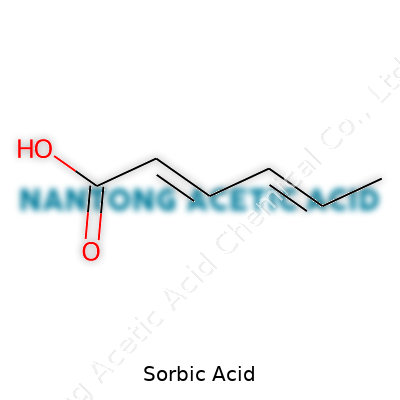
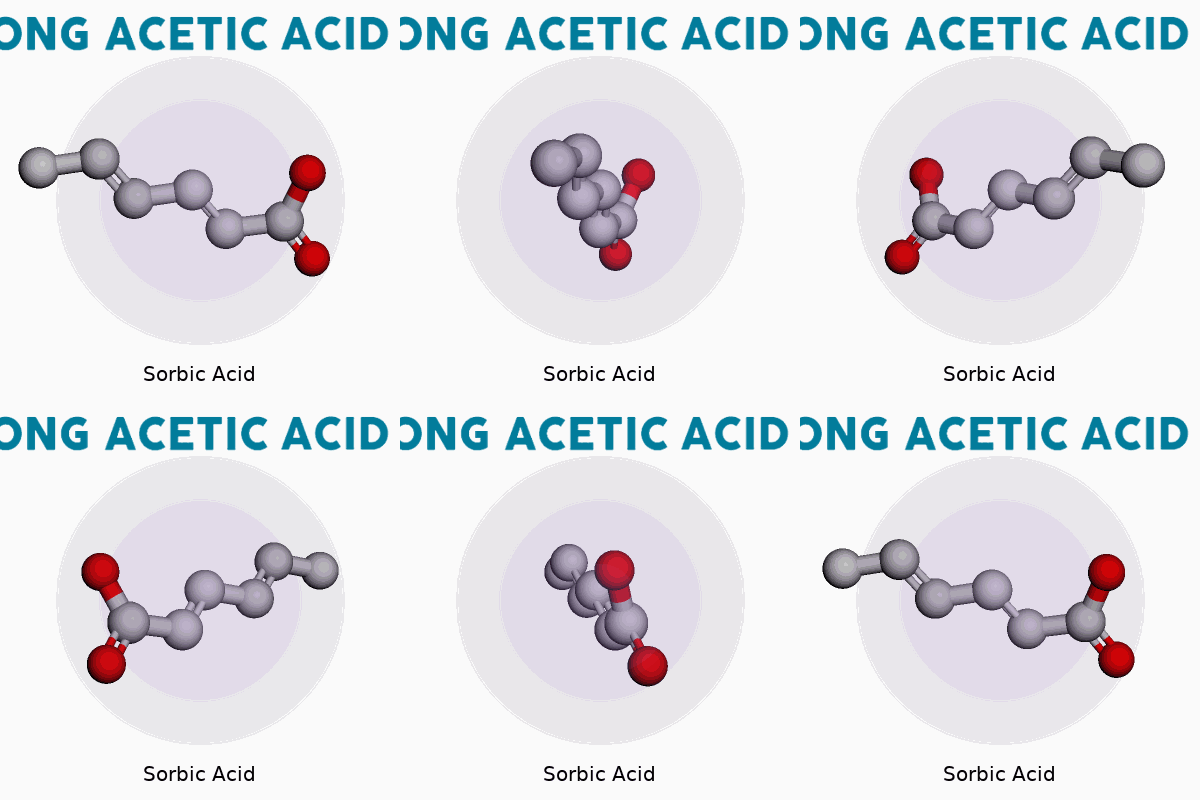
Sorbic acid has a story that drips with practical science and the ongoing quest to keep food fresh. Discovered in the mid-19th century in the unassuming berries of the mountain ash, this compound moved from botanical curiosity to chemical staple, growing up alongside the food preservation industry. Early chemists first pulled it from the wax of these berries, and the food world soon came calling. At a time when refrigeration was a luxury and spoilage common, this natural compound offered a new answer to an old problem. Manufacturers needed a way to keep food safer for longer without changing taste, and sorbic acid stepped in to fill that role, thanks to its ability to slow the growth of yeast, mold, and some bacteria. It’s hard not to appreciate how something so simple could make such a difference in supermarket shelves everywhere.
Sorbic acid’s appeal starts with how it behaves: slightly acidic, nearly tasteless, and able to quietly extend the time food sits in a pantry without spoiling. On the shelf, it looks like a white, powdery or fibrous solid. The technical talk boils down to this — its chemical formula is C6H8O2, and it melts at a relatively manageable temperature, around 135°C. It barely dissolves in water, but mixes into fats and oils without fuss, making it handy for a broad swath of food products. You won’t catch a whiff until you’re dealing with high concentrations, which carry a faint, characteristic odor, but you'd be hard-pressed to notice it in ordinary use.
Open any list of food additives and sorbic acid pops up under names like E200. Anyone interested in the stuff can spot its molecular structure easily: unsaturated straight-chain fatty acid, no twists or turns. Food scientists like it for what it does and, even better, what it doesn’t do — it won’t leave a chemical aftertaste in baked goods, cheese, or beverages. The labeling practices keep it simple and direct, often pointing to its preservative function without ambiguity. This transparency feels important, especially as more consumers scan packaging for clean labels and recognizable ingredients.
Today, the main process to make sorbic acid involves mixing crotonaldehyde with ketene — not the sort of thing people do at home, but standard stuff in modern chemical plants. Early production relied on extracting the acid from natural sources, a slow and limited method. Mass production brought chemical synthesis to the forefront, turning what used to be a rare ingredient into something available at scale for commercial use. Chemists have since fiddled with the process to improve purity and safety. Along the way, manufacturers learned to modify its salts, like potassium sorbate, which dissolve more easily in water. These tweaks help companies match the needs of different foods, from moist pastries to dried sausage.
The chemical backbone of sorbic acid allows for further manipulation. Through simple reactions, its unsaturated bonds react with bases to create salts that widen its range of use. Scientists keep looking for ways to bump up its resistance to high processing temperatures or create blends that target different spoilage organisms. Squeezing more function out of a molecule often means fewer additives in the final product. The opportunities in this space push researchers to look at every detail, balancing performance with regulatory demands and customer expectation for naturalness.
Chemists can’t leave a compound with only one name, and sorbic acid has collected a few over the years. Besides E200, people will see terms like 2,4-hexadienoic acid, or the short, punchy “sorbistat.” Walk into food science circles and discussions swing between these synonyms, but it’s all the same preservative keeping bread mold-free and cheese from fuzzing up. A patchwork of regulatory codes and regional preferences means the labels change, but the function stays the same.
Most standard safety practices work well with sorbic acid. Workers wear gloves and eyewear if they’re handling it in bulk, which keeps irritation at bay. Storage rules call for cool, dry rooms and tightly sealed containers. The bigger safety issue rests on overuse. Dosage limits exist for a reason — too much can lead to product off-flavors, and rare allergic reactions have been noted. Rules from food safety agencies in Europe, the US, and other regions set clear boundaries, protecting consumers and workers without much hassle. People who handle this product regularly usually share a simple respect for its power and the reason behind its regulations.
Supermarkets and food factories depend on sorbic acid more than people often realize. It keeps cheese, yogurt, baked goods, and cured meats free from mold. Winemakers add it to bottles to block unwanted fermentation after bottling. Confectionery producers use it to stop sweets from turning sour. Cosmetic companies work it into creams to slow down spoilage from microorganisms. The list keeps getting longer as manufacturers hunt for effective, minimally disruptive ways to slow spoilage. Its “generally recognized as safe” status in many regions gives it a ticket into everything from pet foods to pharmaceuticals, even as public concern over food additives puts pressure on suppliers to explain its benefits over alternatives.
Research teams continue digging into what makes sorbic acid tick. Analytical chemists chase more precise ways to detect trace contaminants, improving safety for consumers. Product developers hope to blend it with other preservatives to achieve broader protection with lower doses. Regulatory trends shift as new science emerges, forcing the food industry to stay on its toes. Technology lets researchers track how sorbic acid interacts with complex food matrices, and computer modeling opens new possibilities for tailored solutions in food preservation. Universities and private labs test combinations with natural extracts, hoping to create efficient, consumer-friendly blends that could replace harsher synthetic alternatives.
Toxicologists set out decades ago to settle the question of sorbic acid’s safety. Most reputable studies found that its breakdown products — mostly water and carbon dioxide — don’t stick around in the body. Animal research pegged high consumption as a potential irritant, but that takes amounts well above what anyone would eat in daily life. Regulatory bodies use these findings to carve out safe exposure limits, enough of a margin for comfort. Current large-scale reviews have not linked ordinary use to serious long-term health concerns, but there’s always someone double-checking as part of the ongoing review process. Public understanding lags behind the science, and some still worry about “chemical” additives, but the actual risk, used within guidelines, sits lower than a lot of naturally occurring food toxins.
Looking forward, sorbic acid sits at the intersection of food science, regulation, and consumer curiosity. There’s no shortage of new research aiming to support fresher foods with fewer additives. Some startups and ingredient makers chase bio-based production methods, hoping to shrink chemical footprints and reassure label-conscious shoppers. Clean-label demands push for replacements, but none so far can match sorbic acid’s combination of effectiveness, neutrality, and cost. In my own experience, food technologists keep returning to it as the gold standard for shelf-life extension. Near-term, expect more work on blending sorbic acid with natural extracts, along with improved detection methods for trace levels in complex foods. Over the longer term, shifting consumer views on food additives may challenge formulators to communicate benefits more clearly and justify continued use, driving more transparency in manufacturing. Sorbic acid lives in a world where science, practicality, and perception will keep shaping its story.
Walk down any grocery store aisle and check the ingredient list on baked goods, cheeses, or sauces—you’re likely to run into sorbic acid. For most people, it comes across as a mystery compound with a scientific ring. In truth, sorbic acid plays a simple, crucial role: it stops food from spoiling too quickly. The fact that we get to toss a loaf of bread in the pantry and not worry about mold for days owes quite a bit to this compound.
It’s easy to take fresh-tasting, shelf-stable food for granted. Before modern preservatives, people constantly fought spoilage. Mold, yeast, and bacteria do not wait around, and all it takes is a bit of moisture and warmth for food to go bad fast. Sorbic acid steps in here, serving as a shield. Unlike older, harsher chemical additives, it stops a wide range of microbes from setting up shop in food. This helps cut down food waste—a big issue in a world where so much already ends up in the trash.
Fruit juices, cheese, dried fruit, and baked snacks often include sorbic acid or one of its salts. Bread that doesn’t turn green in a few days, cheese without fuzzy patches, and fruit that keeps its sweetness instead of turning into a sticky science project all benefit from this preservative.
Questions about safety always come up with food additives. The good news: extensive studies back up the use of sorbic acid as a food preservative. Organizations like the U.S. Food and Drug Administration and the European Food Safety Authority approve its use in specific amounts. At levels used in food, adverse effects turn out to be rare or nonexistent for most people.
Unlike some other preservatives, sorbic acid does not load the body with strange chemicals. It breaks down into water and carbon dioxide, both of which are pretty harmless. Still, no system is perfect. A small group of people may get mild allergic reactions from direct contact—something to keep in mind with any food ingredient. For people with specific health concerns, being aware and reading food labels closely always makes sense.
Having used sorbic acid in my own work as a home baker and food safety trainer, it’s clear to me how much this preservative matters for home cooks and small businesses. A family-run bakery or a small cheese producer faces a real uphill battle against spoilage, especially without deep pockets for refrigeration or fast turnover. Using sorbic acid grants extra time to sell and enjoy food before it spoils. Less spoilage means better profits and less pressure to toss edible food.
From a bigger picture, extending the shelf life of perishable goods helps cut down on waste and stretches our food supply. In regions where transportation is slow or refrigeration is spotty, a preservative like sorbic acid can mean the difference between feeding people and letting food rot.
Food science keeps evolving. Some people want fewer additives and more “natural” labels, pushing the industry to look for plant-based replacements that do the same job as sorbic acid. Still, there’s no ignoring that low-cost, reliable solutions matter, too. As long as food sits on shelves, gets shipped long distances, and faces all sorts of contamination risks, preservatives aren’t going anywhere soon.
In short, sorbic acid doesn’t grab headlines or spark heated debates. Quietly doing its job, it helps keep food safe, tasty, and available for longer—a little bit of science that shows up in almost every pantry and fridge, whether we notice it or not.
Reading an ingredient label at the grocery store can feel like wading through a science textbook. As a parent and an amateur cook, I notice words like sorbic acid popping up in breads, cheeses, and all sorts of packaged snacks. This sharp-sounding ingredient helps keep food fresher for longer, fighting off mold and yeasts that would otherwise send products off the shelf faster than they should. Many folks wonder whether a word that sounds so scientific fits well with something as basic as lunch or dinner.
Sorbic acid turns up in all kinds of foods—blocks of cheddar in deli fridges, tortillas packed for easy storage, jams and fruit spreads that last a few weeks in the fridge. It isn’t something recent, either. Food makers have used it since the mid-1900s. The point is simple: nobody wants to throw away a good loaf of bread after just a day or two. Sorbic acid helps keep waste down, saves some money, and buys more time before food spoils.
Health always takes the spotlight when chemicals are involved, especially in food. Regulatory bodies play a big part here. The U.S. Food and Drug Administration lists sorbic acid as “Generally Recognized as Safe” for its intended use. They reached this status after reviewing toxicology studies and seeing no red flags at regular consumption levels. Similar approvals appear in countries around the world, with the European Food Safety Authority offering a thumbs-up too. The World Health Organization sets clear recommendations on how much is safe—well above what we usually eat.
Researchers checked for a range of issues, including allergies, cancer, and long-term health effects. No credible evidence links sorbic acid to chronic problems or genetic damage at levels in food. Once digested, the body breaks it down to water and carbon dioxide—much like what happens with many other natural substances. I have yet to come across a reliable source claiming that sorbic acid, at amounts seen in everyday food, raises the sort of health scare that headlines love to report.
Some consumers talk about side effects like mild irritation or hives. These stories deserve attention and doctors can help track down if an individual reacts to certain preservatives, including sorbic acid. The big picture, though, stays the same—most people never notice any trouble. It’s always wise to keep an eye on how our bodies react and talk with a healthcare provider about any new symptoms.
All this information leaves people at a crossroads. Some prefer all-natural pantries; others don’t mind safe additives if it means avoiding food waste. For families hoping to steer clear of most preservatives, small changes in shopping habits go a long way. Fresh produce, home-cooked meals, and simple ingredient lists all help cut down on anything extra—sorbic acid included.
Food safety boils down to smart choices, both at the production line and at home. Labels tell us what’s inside and scientific reviews keep tabs on safety. Sorbic acid earns its place on the shelf not by being perfect, but by helping food manufacturers provide safer, longer-lasting food without adding serious health risks.
Step into any supermarket and take a quick glance at the ingredient lists. There’s a good chance you’ll spot sorbic acid hiding in plain sight on hundreds of products. It appears everywhere—baked goods, cheeses, juices, even some dried meats. This isn’t seasoning or flavoring; sorbic acid stands guard against unwanted molds and yeasts, stretching out the lifespan of foods we rarely finish in a single sitting.
Over the years, my own kitchen has seen the benefits. Breads stay soft a bit longer. Cheese, tucked away in the fridge, resists turning green at the edges as quickly. The main reason stems from sorbic acid’s ability to stop fungi before they can dig in and spoil food. Bread bakers rely on it so that their loaves stand up better on store shelves and ride out road trips from factory to warehouse to shop. Dairies use sorbic acid in cheeses, especially the softer types that provide just the sort of moisture bacteria and mold love. I’ve seen friends run small bakeries who swear by it, saying a loaf’s window of freshness can jump by several days. In the world of food packaging, that makes all the difference between a sale and a loss.
Look closely at labels for things like fruit drinks, soft drinks, and pre-packed dips or sauces. These products tend to attract microbial growth quickly once exposed, but sorbic acid handles that risk. While growing up, I noticed my favorite childhood juice said it “contains preservatives.” Sorbic acid likely helped those drinks survive family picnics on hot weekends. It shields oils and salad dressings too, protecting flavors from breaking down as they age. I’ve worked with food startups wrestling with logistics, and nearly every one mentioned sorbic acid as a cost-effective insurance plan, saying without it, products aged and soured too quickly to reach distant customers.
Plenty of folks would rather skip additives entirely. The movement toward “clean labels” reflects suspicion about things we can’t pronounce on packaging. Yet, food waste carries its own risks. Spoiled food means unsafe eating and wasted money. Sorbic acid strikes a balance: it’s drawn from natural sources and doesn’t linger in the body, unlike some older preservatives. The FDA and European food authorities recognize its safety in reasonable amounts, and plenty of food scientists trust its reliability thanks to decades of solid data.
Of course, it works best as part of a bigger plan—strong hygiene in food plants, airtight packaging, cooler supply chains, and clear expiration dates. To reduce reliance on sorbic acid, companies continue to experiment with plant extracts, better refrigeration, and innovative packaging, but the food system’s sheer scale means most brands rely on what works best and longest.
The reason we see sorbic acid in so many foods turns out to be practical: it wards off spoilage, keeps prices reasonable, and cuts waste in a world where logistics stretch thin. For now, it’s tough to picture a supermarket without it somewhere on the shelf, standing guard in foods that travel far and wait for busy families to open them on their own schedules.
Anyone who reads food labels has probably come across “sorbic acid.” It’s everywhere—cheese, bread, wine, dried fruit, even soft drinks. Sorbic acid stops mold, yeast, and fungi from growing, so food lasts longer before it spoils. It’s approved by regulators like the FDA and EFSA. I’ve seen it listed on products I throw in my cart without a second thought, and most people probably have as well.
Plenty of folks wonder about the safety of food preservatives. Sorbic acid isn’t some exotic lab creation; it was originally found in rowan berries. Most of what lands in food now comes from synthetic processes, but it’s chemically identical. When scientists and food safety authorities study sorbic acid, they don’t see big red flags. Decades of research and oversight back up its use in normal food levels, so panic isn’t warranted.
That doesn’t mean nobody ever reacts to it. A very small group of people have reported skin irritation from direct contact, usually in the workplace or with products like cosmetics and ointments. Eating it in food rarely leads to allergic reactions, but it can happen—think of hives or mild itching. Serious health problems from eating typical amounts don’t show up in medical literature. No carcinogenic or fertility-damaging effects appear in high-quality studies either. Anyone sensitive to food additives or with a track record of allergies knows the drill: new foods, even common ones, can occasionally surprise you.
In the science world, researchers talk about “acceptable daily intake.” That’s the amount people can eat, every day, over a lifetime, without health risks. Sorbic acid has a pretty generous cushion there; it breaks down to water and carbon dioxide after it does its work. Regulators around the world, with their sometimes-strict standards, agree it’s safe in the very small amounts used as a preservative. Food technologists keep looking for problems, and if any solid evidence popped up, protocols would change quickly.
Some people steer clear of preservatives as a personal choice, motivated by wanting to eat “clean,” by allergies, or just because they prefer food with simpler recipes. That’s totally valid. Reading labels and choosing fresh or preservative-free foods gives you control. Smaller bakeries and organic brands often lean on old-school methods, so alternatives exist—even if you sacrifice shelf life.
Others find that preservatives cut down on food waste at home. In my own kitchen, fresh bread on the counter rarely survives the week, unless I refrigerate or freeze it. Commercial bread with sorbic acid makes it through lunchboxes all week. Having that choice matters, especially for busy households.
More food makers look for ways to preserve freshness without extras. Fermentation, smart packaging, ultraviolet treatments—all get attention. If these become cost-effective and keep food safe, they might shift reliance away from preservatives like sorbic acid over the next decade.
If you experience itching, rashes, or a weird reaction after eating something, bringing the ingredient list to your doctor makes sense. Actual allergies or sensitivity are rare, but ruling them out helps. Food safety experts and regulators have clear processes for checking up on common additives, so if risks appeared in new research, rules would shift. Eating a balanced diet and mixing up the foods you eat is a smart plan. For most people, sorbic acid in your sandwich or snacks won’t spark any real trouble.
I walk through grocery aisles more than I care to admit, flipping over packages to read ingredient lists with the curiosity of a detective. I spot sorbic acid on food labels from bread to shredded cheese and fruit spreads. The big question always lands at this: is sorbic acid natural or synthetic? The answer tends to get buried in ingredient debates, but it matters for anyone who wants transparency in their food.
Sorbic acid naturally shows up in some berries, especially the rowan berry—nature figured out food preservation before we did. Scientists first discovered it in the 1850s through natural extraction, but the world didn’t start tossing rowan berries into bread dough. Instead, the demand for affordable, effective preservatives made companies look for ways to make sorbic acid on a large scale. Today, we produce almost all sorbic acid in factories using a clever chemical process. This method starts with crotonaldehyde and ketene—neither of which comes from a berry bush. As a result, most sorbic acid in food has a synthetic origin, even though it matches the molecule found in nature.
Here’s where facts cut through food trends. Sorbic acid keeps mold and fungi off our food. This helps producers keep bread shelf-stable and reduces food waste—a real concern as we try to balance convenience with health and sustainability. The FDA and European Food Safety Authority both confirm that current usage levels are safe. Studies over decades show that people process and excrete sorbic acid without harm.
Still, the word “synthetic” sparks debates. Some argue food should only contain ingredients you can pick or pronounce, avoiding anything cooked up in a plant. In reality, “synthetic” just means it’s made in a lab, not that it’s dangerous or somehow less pure. As someone who likes to grow herbs at home, I appreciate nature’s ingredients, but I also see the value of food security and safety that modern preservatives bring.
Ingredient labels could step up their game. The line between natural and synthetic isn’t always clear. A banana grown in Ecuador has a vastly different carbon footprint and chemical profile than locally grown produce, yet both are “natural” by the usual definition. Sorbic acid, despite sharing a chemical structure with its berry-source original, lands as “synthetic” by most standards because of its manufacturing process. If companies were more upfront about origin, processing methods, and why preservatives are used, shoppers wouldn’t have to navigate confusing ingredient lists or fall for greenwashed marketing.
People deserve honest information, not just buzzwords or blanket reassurances. Trust grows when companies explain why a preservative gets used, where it comes from, and what it means for safety. For those hunting for “all-natural” foods, it pays to know that many so-called natural products still rely on some synthetic additives for safety and shelf life.
Eating clean is great, but bending facts around natural and synthetic ingredients doesn’t help. Everybody should push for open communication about food additives while making informed choices that fit real-life needs and values.